Showing posts with label Author Interview. Show all posts

Wednesday, March 19, 2014

Author Interview with Rosie Pugh for The Pearliad


Today I have author Rosie Pugh on the blog for an interview! I don't think there's much I can really say except, welcome to the blog!

Can you tell us a bit about your book?

The Pearliad is a Young Adult novel, the first book of the Arca Trilogy, set in a modern world in which the Roman Empire never fell. The idea behind the story is that the moment a human being is born, the Fates assign them an ‘arca’ and place it anywhere in the world. It could be any kind of everyday object, created to blend in with the mortal world, and the person is given no clue as to where their arca is. You can only live as long as your arca remains intact; if your object is destroyed, you will die. However, there is one important draw to finding out what your own personal object is - because if you can recognise and possess your own arca, you can live forever.

Our heroine, Effie Seabright, is a teenage girl living on the Indigo Isles, a backwater of the Empire. She finds a pearl washed up on the beach by her home, and soon discovers that this pearl is the arca of Gideon Stickings, one of the most powerful and corrupt businessmen of the Roman Empire. Effie faces a difficult choice; she has to decide whether to protect the pearl, out of respect for the Fates and in accordance with the customs of her people, but somehow prevent this evil man from getting hold of his own arca and becoming immortal; once immortal, Stickings would become unstoppable.

Tell us 10 interesting facts about yourself.

1. I’m a 2nd Dan Black Belt in Tae Kwon-Do, which I’ve trained in since the age of six.

2. I was an extra in the 2008 horror film ‘The Children’ – and my name is listed on IMDb!

3. When I was four, I managed to get a chair stuck on my head.

4. My favourite food in the world is my mum’s roast lamb dinner.

5. When I’m stressed I crochet.

6. I’ve always been fascinated by names – which is why my pets from the past have been called Shingles, Hugo, Hepzibah, Archibald and Hector.

7. There is one Greek verb that I can always remember: ῥαφανιδόω (rhaphanidoo) which means ‘shove a radish up the arse’.

8. I was once a professional toga tie-er.

9. I can play ‘Daddy’s Taking Us to the Zoo Tomorrow’ very badly on the guitar … and there is video evidence somewhere to prove it!

10. Inexplicably, my arca would be a tin opener.


What kinds of jobs have you had besides writing?
I’m currently 20 years old and in my third year of University, so I’m afraid this question won’t be as interesting as it would be about other people! I worked at my local independent bookshop for two years while I was at school. I absolutely loved it; my favourite part was seeking out an obscure book for customers who had only a flimsy description of the cover to identify it. In fact, I first got the idea for the Arca Trilogy while I was sat behind the till on a quiet Saturday afternoon.

I have also worked at an After School and Holiday Club for 8-15 year old kids for the past 5 years. That is where I learnt that teenagers certainly do not need patronising, which is something that I have taken forward into my writing.


Do your own beliefs come through very strongly in your books, any examples?


There are no brazen attempts in the book to broadcast my personal beliefs. However, seeing as I created my own alternate universe in the Arca Trilogy, it was quite easy to use that world to highlight certain prejudices and preconceptions in our world. The reader gets a cursory glimpse of the inherent classism of the Roman Empire, which values Roman citizens far above citizens of any of the conquered territories. Britannians are called ‘barbarians’ and ‘Brittunculi’, a derogative name used by Ancient Romans to describe the natives of Celtic Britain.

Effie comes from a very isolated community called the Indigo Isles, which was inspired by an extinct rural community who lived on St Kilda in the Outer Hebrides of the UK. I incorporated many of the customs of the St Kildans in my portrayal of the Indigo Isles, with one significant difference: on St Kilda, only adult males were allowed to attend the daily ‘Parliament’ in which the activities of the day were discussed. On the Indigo Isles, both adult men and women attend the weekly Gathering; as Effie says, “a woman’s opinion on the Indigo Isles was just as important as a man’s. I took after Ma in that I’d listen first and speak later, but that didn’t mean either of us would go along with something we didn’t agree with”. This is a very important aspect that contributes to Effie’s worldview. She has never been told that she is inferior to a male, or to any other person who happened to be born in “the bright light of the Roman Empire”.


Do you have a favorite character you enjoyed writing about the most?

The Pearliad is a first person account from Effie’s point of view, and the plot very much centres on her actions, her thoughts and her feelings. She is as familiar to me as a sister, and I find it easy to inhabit Effie’s mind as soon as I settle down to write because we are very similar. It would feel like a betrayal to say I enjoy writing any other character more than I do Effie!


Do you have a character that was more difficult to write?


It took me a while to decide how I was going to characterise Gideon Stickings, the main antagonist. He is a complex character with an interesting back story (that is yet to be explored!), but, as a successful businessman, he needed to be able to mask all of that when confronting his adversaries. It helped to give him specific mannerisms and quirks that both identify him and repulse Effie.


Do you have a favorite scene?

My favourite scene to write was the climax of The Pearliad, in the penultimate chapter. I could visualise it so clearly in my head, and I hope that it comes across just as graphically for the reader. I remember feeling emotionally drained when I finished that scene.


If you could time travel when and where would you go and why?


I would go back to meet Homer, the Ancient Greek poet. It is so frustrating to study the works of one of the world’s most accomplished literary geniuses, hundreds of years before his time, and not know a thing about him. To think that he was crafting masterpieces still admired today before writing was even a widespread phenomenon is just mind blowing.


What is one book you would recommend that is not as well known as you feel it should be?


The Last Witchfinder by James Morrow. His use of language is sublime, his canvas vast and colourful.


What is one thing you have a passion for that you want to share with the world (other than writing)?

The study of Classics; that is, Ancient Greek and Roman literature, language, culture, mythology, history and philosophy. In the UK it is seen as 1) irrelevant in the modern world and 2) the domain of posh, upper class private schools. Neither of these are true, and I am a wholehearted supporter of the teaching of Latin, Greek and Classical Civilisation in state schools.


What can we expect to see from you in the future?

Well, first of all I need to finish university! This summer I will be writing the sequel to The Pearliad, called The Buttonica, and probably the following year I will complete the trilogy with The Ribbonid. I will never stop writing, but it remains to be seen whether I will need to get a full time or part time job to support myself when I leave Oxford. I have plans for at least another two stand alone novels when I finish the Arca Trilogy, so I’m sure there will be much more to come in the future from me!

Wednesday, January 29, 2014

The Warrior & the Flower Tour- Interview & Giveaway


Welcome to my stop on the tour for The Warrior & the Flower by Camille Picott.  This is an adult high fantasy.  I LOVED this book, you can check out my 5 star review HERE.  

To celebrate Chinese New Year the tour is running Jan. 27th-31st with mostly reviews and only a few interviews and spotlight posts.  Be sure to check out the tour page with additional info and list of tour stops.

For my stop I asked Camille to answer a few questions about Indie publishing.


When, and how, did you come to being an indie/self published author?

I self-published a full-color illustrated novella in 2008, back before indie publishing became popular.

Did you attempt to publish traditionally? What were your experiences?

I spent years and years trying to publish traditionally. It was exhausting and frustrating. I spent a large chunk of my time going through the motions of trying to find an agent/publisher—crafting and personalizing query letters, writing synopsizes of varying lengths (because different agents require different lengths), researching agents and editors, etcetera. Now I spend the bulk of my time writing, which is much more satisfying. I don’t have to waste time with gatekeepers.

If you were offered a deal with a traditional publisher, would you take it?

I am a firm believer in being open to opportunity and evaluating everything that comes my way. If offered a deal with a traditional publisher, I would look carefully at the contract to see what was being offered and weigh that against the benefits of being an indie.

What is the best part of being indie/self published, for you?

Being able to send my babies out in the world. I love finishing a novel, putting a pretty cover on it, and releasing it into the wild.

The indie/self published scene is constantly changing. Even quite a few traditionally published authors have ventured into the world of self publishing. What do you predict for the future? How do you think the indie scene is changing and where do you think it will go?

I think we are going to see more companies like Amazon that cater directly to indie authors. Amazon has come up with so many creative ways for indies to promote their books in countries all over the world.

As an indie/self published author, what has been your biggest obstacle?

In the beginning, I struggled a lot with the stigma of being self-published. Back in 2008, being an indie was like wearing a big sign that says MY WRITING SUCKS.  It still does in some circles.

In the world of inside/self published not everyone goes about things the same way. Many make mistakes (and hopefully learn from them). What are the biggest mistakes that you think authors are making and how do you suggest they improve?

Every writer needs a good copy editor. I always tell people to set aside money so they can pay for a good editor. It’s worth every penny.

If you’re interested in a more in-depth look at indie publishing, you can check out my Writer’s Toolbox article on Amazon for $.99. It’s entitled Indie Publishing Essentials: 9 Tool Every Speculative Fiction Author Needs for Indie Success.

How do you approach reviewers? And what has worked best when doing so?

Honestly, I stopped approaching reviewers quite a while ago. It feels too much like querying agents and I just don’t enjoy it. When I want to promote a book, I find it best to work with a book tour company. (Like CBB Book Promotions!)

When it comes to sales, what do you think has worked best for you and had the biggest impact?

I packaged the first 4 chapters of two of my novels as free excerpts. I gave them their own covers and titles (though I clearly state they are excerpts in the description). The freebies have bumped up the sales of the corresponding novels. Some people give away their entire first novel for free, but I prefer giving away the excerpts. Check out Sulan, Episode 0.5: The Cube and World Kingdom Warrior for examples of the free excerpts.

If someone tells you they are thinking of self publishing a novel themselves and they would like some advice on where to get started or some tips for success, what advice would you give?

I’d tell them to check out my article, Indie Publishing Essentials: 9 Tool Every Speculative Fiction Author Needs for Indie Success.

Bad reviews are inevitable; most every author gets at least some. How do you handle things when you get a bad review so you don’t get hung up on it or possibly lash out which could cause more damage in the long run?

Unless I’m on a blog tour, I don’t usually read reviews. They just make me anxious. I can’t control what other people think or say so I just prefer not to torture myself. I suppose that makes me something of a wimp! I love all my stories and gave my heart to each of them. Even if they don’t strike a chord with everyone, I feel good knowing I made each the best book I could.

Indie books I love:

Emperor’s Edge series by Lindsay Buroker – high fantasy steampunk
As The World Dies series by Rhiannon Frater – zombie (these were actually picked up by Tor, but they started as indie!)

Thanks for hosting me, Candace!

Thanks for being on Camille, I think I need to check out both of Lindsay Buroker's series, those sound good! 


The Warrior & the Flower by Camille Picott

Yi, a retired soldier, has lost everything he loves—his wife, his daughter, and his home. He seeks refuge from his heartache by plunging into a secret mission for the World Emperor. The assignment takes him to the doorstep of a brothel, where he witnesses the madam beating a young girl. Drawn by the child’s striking resemblance to his lost daughter, Yi rushes to her defense and negotiates for her purchase—after all, how hard can it be to care for one little girl? But between the child’s inquisitive nature and the dangerous secret she carries, he gets more than he bargained for.


Goodreads | Amazon | B&N | Smashwords  


About the Author: 
Camille Picott is a fifth-generation Chinese American. She writes science fiction and fantasy books with Asian characters and/or Asian settings. Camille grew up reading speculative fiction stories largely devoid of Asian characters and culture. This, coupled with a passion for her heritage, is the reason she strives to bring some aspect of Eastern myth, legend, culture, and ethnicity to all of her writings. To visit Camille, go to www.camillepicott.com.


Website | Facebook | Goodreads


Giveaway:

 Rafflecopter giveaway

This tour was organized and put together by CBB Book Promotions.
 

Tuesday, May 7, 2013

Adult Review & Author Interview: Generation V & Give@way of 10 copies!


Today I'm really excited because I have M.L. Brennan on the blog for an interview!  I also have a review of Generation V at the bottom of this post.  And some fantastic news folks, there's a giveaway of TEN copies, yes folks, that's 10 copies up for giveaway!

Let's welcome M.L. Brennan to the blog!

Thanks so much for visiting my blog today!

Thanks so much for having me!

Generation V was a book that really surprised me, I hadn't heard much about it before I got it so it wasn't one I was pining for or anything, but the second I started reading I was completely pulled into Fort's life and loved his voice!  I found it to be very authentically male, but you're a female, was pulling off the male voice at all difficult for you?  Did you have any tricks for getting it 'authentically' male?

Oh, I like this question a lot. The short answer is “no,” but now I’m going to lay a long answer on you.

Literary gender-swapping is actually something I do a lot of, and really did a lot since I started writing seriously in college. There’s always a bit of controversy about this – there are people who will argue that men can’t write women realistically, for example – but I think that it’s actually a really good exercise for any writer, because what you ultimately realize is that gender is just another piece in constructing a character. There’s always the question of experience when people argue about this – that women can’t write men because they’ll never truly experience what it is to actually function in that skin. But you can make that argument about a lot of things – age, level of affluence, and race all spring immediately to mind. I’d hate to be limited to only my own experience when it came to crafting characters.

Fort is a guy, which is something that I’ll never experience. But I’m also not a vampire. And I’ve never had a relationship end because someone cheated on me. And the thought of actually being a film major makes me shudder. Constructing all of those things together, though, helped me figure out who Fort was, and what he would sound like. And once I figured out what his voice would be, the rest fell into place.

Funnily enough, there was a character who I had such a problem writing that I just rewrote a scene to avoid it – but that character was female. (you’ll meet her in the next book, and writing her just never got any easier)

In terms of tricks… it helps to remember that at our core, we fundamentally operate off of emotion and need. Once you figure out how the character feels and what he needs, it helps a lot. It also helps to have a good editor – it didn’t happen a lot, but there were at least two separate instances where my editor sent me a note that was basically “Can you butch Fort up a little here?” and I though, oh, okay, I guess this incident won’t *actually* drive him to tears. But I think that both of those instances could have applied equally to a female protagonist.


The vampire 'world' you created was very unique.  I haven't read as many vampire stories in the past year or so but I feel like I've read my share of them in the past and finding a real unique spin is kind of hard, it seems like it's all 'been done' yet you came up with something new.  How did the ideas for the vampire 'workings' come to you?  I mean, the whole breeding thing is seriously gross and creepy, but yet so fascinating...

Thanks, I was definitely aiming for new! My personal take on vampire workings really originated from a

need for my vampires to make sense to me on a biological level. A creature that is physiologically frozen in time from the moment they are changed, won’t ever die, and only have to do a small blood donation to make more of themselves? That sounds like a population disaster that would leave the entire planet in the equivalent state of Guam and its snakes.

So I rethought vampires in two directions – first, as apex predators. Watch any animal documentary and you notice that for the three-hundred mule deer running in terror, there are only about five wolves. So there needed to be similar biological differences between humans and vampires as to mule deer and wolves to get that kind of disparity naturally.

Secondly, I thought about vampires as parasites. This led directly to the breeding, since my source of inspiration on that one was the tick. And anything that is based on a tick is going to be creepy and gross, but it sure was fun to dream up and then put into action.

In Generation V Fort starts learning more about the supernatural around him and starts acknowledging the fact that he really knows very little about all the 'creatures' in his world.  We meet a few in Generation V, do we continue to meet more in the next book?  Any hints on what we might get to see? 

The next book will definitely involve Fort becoming much more involved in the supernatural parts of his world, which is also going to make his ties to humans become more problematic and dangerous.

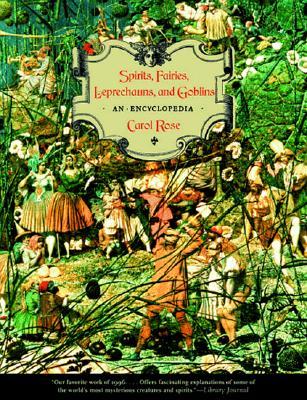
As for hints… I can confirm straight out that the kitsune will definitely be back, but beyond that… hmm… well, let’s just say that when I was planning this book, one of my primary resources was Carol Rose’s marvelous Spirits, Fairies, Leprechauns, and Goblins: An Encyclopedia.

There's not really much for romance in Generation V, but there's a bit of chemistry there and I think anyone who reads it chants in their head "kiss, kiss, kiss..." so is there any kissing in the next book?  Please say yes!

Yes, but something that I’ve always loved in fiction is when the romance is a slowly boiling pot. Think about any movie version of Pride and Prejudice – by the end you are screaming for Elizabeth Bennet to just grab Darcy and lay one on him. But if that had happened an hour earlier, it wouldn’t be as great when it finally happens. (I’m thinking here of the great recent web series The Lizzie Bennet Diaries – it took something like 98 web videos and several months to actually see the two characters kiss. And it was totally worth the wait.)

I don’t make the reader wait that long. There is kissing in the second book. But I will not confirm the participants of said kissing. 

Now I'm really excited for the next book! Can you give us an estimate on the release date of it, do we have to wait a whole year?  And do you know yet how many books will be in the series?

Fantastic news on that front! The second Fortitude Scott book, Iron Night, will be published in January 2014!

So far I’ve been contracted for three books, but I definitely have ideas for more.

Do you have any other works in progress that are different from this series? 

I have a few ideas I’m playing with right now, but right now the only thing very seriously on my worktable is the third Fortitude Scott book, which I’m writing right now.

And last question, what is your most recommended book at this very moment?

Oh, that’s a really tough one, because I feel like I should be recommending something that isn’t getting a lot of attention… but I just can’t help myself – Anne Bishop’s Written In Red is mind-blowingly good, and I’ve already re-read it a few times.

But after Written In Red, people should absolutely check out Cassie Alexander’s Nightshifted, which has a fantastic heroine, an insanely active plot, and also answers the fabulous question of – if you have multiple species hiding in plain sight from humans, what the hell happens when one of them needs to go to the hospital? Great stuff.


Thanks again for coming on today! 

Thank you so much for having me, and this was so much fun!

Be sure to find M.L. Brennan on her Website | Twitter

Thanks to the publisher, Ace/Roc/Penguin, I have ten copies for giveaway!
Open to US only.
Must be 16 or older to enter.
Ends May 21st.
Fill out the rafflecopter to enter!
a Rafflecopter giveaway


Generation V (American Vampire #1) by M.L. Brennan
Paperback, 320 pages
Published: May 7th, 2013 by Roc
Source: Publisher
Reality Bites

Fortitude Scott’s life is a mess. A degree in film theory has left him with zero marketable skills, his job revolves around pouring coffee, his roommate hasn’t paid rent in four months, and he’s also a vampire. Well, sort of. He’s still mostly human.

But when a new vampire comes into his family’s territory and young girls start going missing, Fort can’t ignore his heritage anymore. His mother and his older, stronger siblings think he’s crazy for wanting to get involved. So it’s up to Fort to take action, with the assistance of Suzume Hollis, a dangerous and sexy shape-shifter. Fort is determined to find a way to outsmart the deadly vamp, even if he isn’t quite sure how.

But without having matured into full vampirehood and with Suzume ready to split if things get too risky, Fort’s rescue mission might just kill him.…

After suffering a reading slump for a good long week and setting aside book after book I wasn't sure what I would think picking up Generation V.  Sometimes urban fantasies are just the thing to knock you out of a slump though and I was immediately drawn in by Fort's voice.  It's in first person, which I think helped me along quite a lot because I really felt that connection with him.  I think being inside someone's head instead of outside looking in, makes the reading a little easier.  And Fort is a great guy.  He may let people walk all over him, and is unable to defend himself in any way at all, but he's a great guy!  Okay, so yeah, he starts out being a wimp.  And yeah, he's a vampire but not really.  He's still mostly human.  And to understand how that works you'll have to read the book because that would take far too long to explain.

Vampires in this book aren't sparkly and are often cold blooded killers.  I feel the author did a great job in portraying that they are NOT good guys, yet there are worse guys than some of Fort's family.  That while he hates what they are and what he will become, he sees that they could be worse. The author created a very unique take on vampires.  I felt like it was a tad hard to wrap my head around initially, figuring out how they breed and all that, but as I read on everything clicked into place.  

As I mentioned already, Fort is a great guy.  In the beginning he's just a bit too nice.  He lets people walk all over him and doesn't stand up for himself much.  But he grows a lot through the story as he discovers that some girls have gone missing and a vampire is responsible that he must do something.  But his family won't get involved and he's been forbidden to do anything.

Suzume has been hired to protect Fort and from the moment she comes into the story everything changes.  She's larger than life and does a decent job of stealing the show.  Of course since we're in Fort's head that doesn't really happen, but she was just so FUN when she came on the page.  She's a kitsune and holds her own powers and magic.  She also teaches Fort much more about the supernatural community, which he was completely clueless about.  She stands by Fort through much of what's going on in the book, but will she stand by him when no one else will?  When he's ready to risk EVERYTHING to rescue a girl?  You'll have to read it to find out!

I flew through this book like nothing and I wanted to read more when it was finished.  I'm absolutely eager for more and will be chomping at the bit to get the next book.

 Disclosure: I received a copy of this book for review purposes.  All opinions expressed are my own and I was not paid or influenced in any way.

Photo credits:
Wolf: photo credit: <a href="http://www.flickr.com/photos/ucumari/2366638158/">ucumari</a> via <a href="http://photopin.com">photopin</a> <a href="http://creativecommons.org/licenses/by-nc-nd/2.0/">cc</a>
Deer:  photo credit: <a href="http://www.flickr.com/photos/53825985@N02/6347146782/">** Lucky Cavey **</a> via <a href="http://photopin.com">photopin</a> <a href="http://creativecommons.org/licenses/by-nc-nd/2.0/">cc</a>

Friday, March 29, 2013

Wasteland Blog Tour: Author Interview & Give@way!

Wasteland by Susan Kim & Laurence Klavan
Welcome to the Wasteland. Where all the adults are long gone, and now no one lives past the age of nineteen. Susan Kim and Laurence Klavan’s post-apocalyptic debut is the first of a trilogy in which everyone is forced to live under the looming threat of rampant disease and brutal attacks by the Variants —- hermaphroditic outcasts that live on the outskirts of Prin. Esther thinks there’s more to life than toiling at harvesting, gleaning, and excavating, day after day under the relentless sun, just hoping to make it to the next day. But then Caleb, a mysterious stranger, arrives in town, and Esther begins to question who she can trust. As shady pasts unravel into the present and new romances develop, Caleb and Esther realize that they must team together to fight for their lives and for the freedom of Prin.
Buy Links:

I haven't yet read the book but I did my best trying to come up with a few questions for them! Let's welcome Susan Kim and Laurence Klavan!


  1. So we can get to know you a little better can you tell us 5 interesting facts about yourself?

      LAURENCE:
1)      I have a twin brother.
2)      My father was a radio disc jockey.
3)      I have a sharp point at the front base of my neck that I’ve been told is a gill from when I used to be a fish, so apparently I haven’t completely evolved (I’m not kidding, that’s what they said)
4)      I threw all my guests out of my own bar mitzvah party
5)      During a fight when we were kids, my older brother landed on my knee so hard he dislocated it and we saw the bone sticking out. Then, terrified, as I screamed in pain, he knocked it back into place (I’m not kidding, this happened)
      
SUSAN:
1) I was once swept out to sea when I was about ten years old. I was wearing an inflatable life vest and found the sensation of pulling pulled out by the waves so pleasant, it didn’t occur to me that it was a bad idea. I was maybe half a mile out and I saw all these people running around onshore, pointing at me and screaming. They had to send a boat out to get me.
2) I love cats. Actually, I like most animals, including the ugly, creepy, and squishy ones… but I really, really love cats. They’re beautiful, have a remarkable sense of themselves, and are often really funny, too.
3) I hate bananas.
4) When I was six, I cut my wrist by accident and had to go to the hospital to have it stitched up. It was like a war zone in the emergency room: there were at least four or five other kids in there, and they were all screaming their heads off. I didn’t make a sound and afterward, the nurse said to me, “you’re braver than a boy.”
5) Other than that fleeting moment of bravery/stoicism, I cry really easily. In fact, I bet I could make myself cry right now if I wanted to.


  1. Now, for those of us who haven't read the book yet, can you tell us 5 things about it that aren't in the description?

1)      At one point, Caleb hides out in a school, and he and Esther have no idea what the building is for.
2)      Since virtually no one reads, there’s rampant ignorance. No one knows how to boil water to purify it. And the only way people know how to eat is by breaking into homes and stores, “Gleaning” old packaged food that’s just barely edible like dried beans, honey, salt, etc.
3)     Other than the cats owned by one of the characters, there are no more domesticated 
     animals. Feral dogs, descendants of house pets, roam the streets in packs.
4)        Teenagers can get married and have kids, but it’s a lot different than it is in the     
present day.
5)    There’s a love scene in a cemetery.

  1. If you could travel to any time and any place where would you choose to go, and why?

SUSAN: You mean “travel” as in a vacation and I’d definitely be coming back, right? Because no matter how cool the past is, I keep thinking about useful modern stuff… like, I don’t know, antibiotics! But that being said, I think I’d be most interested in traveling to either Paris in the 1920s or New York City in the late 1940s. Both were sophisticated, impassioned, and intellectual places where men and women were doing cool things in art, literature, fashion, music, and theatre… probably in reaction to the horrors of the two world wars. But they must have been amazing cities to visit!
LAURENCE: I think those two periods would be great, too. I also think the turn of the (last) century in America would have been interesting, with writers like Jack London, Edith Wharton, Henry James, Ambrose Bierce, and O.Henry around. As long as you could come back and get penicillin and your email, things like that.

  1. What is your #1 most recommended book?

SUSAN: That is SO not fair a question… there are too many! I’m staring at my bookshelves in total panic, thinking “that one. No, that one. No, that one.” I guess I would have to say…umm, ohh, errr… I can’t! Okay, okay… how about Alice’s Adventures in Wonderland, better known as Alice in Wonderland? It’s really delightful, unique and trippy in a highly influential way, and both funny and unsettling. At the same time, it manages to treat the central character with detail, respect, and affection. It’s a terrific example of writing for children, in that the book serves the young reader, not vice-versa.

LAURENCE: I agree, there are too many. As far as books about young people go, Mark Twain’s Adventures of Huckleberry Finn is one of the greatest. And J. G. Ballard’s Empire of the Sun.

  1. One thing I always like to ask authors is if there's something they have a passion for that they want to share with the world.  Like some donate time or money to certain organizations, some are passionate about improving the health care system, the list goes on.  What is something you feel strongly about?

LAURENCE: I mostly worry, stew, and dwell, which obviously isn’t enough. But the arts are important to me. When I have it, I donate money to groups that allow people to plan their families—or not have them at all. And to people who provide shelters for animals.

SUSAN: I mostly donate money to environmental, animal protection, and international aid groups. I mean obviously, I’m not Bill Gates, and I know what I contribute isn’t necessarily going to make a big difference in the world; but still, these are causes that break my heart and depress me and make me furious. And as someone who also writes a lot for television, I also volunteer for the Writers’ Guild of America East. That’s a trade union made up of TV, film, news, and digital writers. I not only like writers, I like helping them stick up for their rights. 

  1. Last question, what can we expect to see from you in the future?

SUSAN: The next two books in our series will be coming out over the next two years: Wanderers and Guardians. Without giving too much away, I can tell you that the second book follows Esther and her friends after an earthquake drives them out of Prin and they head north for a better life. In the third book, they’re settled in their new home, but an unexpected series of events threatens their existence. We’re really excited about both of them; there’s a huge amount that happens to Esther, Caleb, Skar, and the others. They meet many people, some kind and helpful and the others decidedly not. And the central characters change, as well, in major ways.

I also hope to continue writing by myself and with Laurence; we’re always talking about possible ideas for new projects. And I’ll most likely be writing children’s TV, which I’ve been doing for years, now… the most recent is an episode I did for a new PBS show called “Peg + Cat.”

LAURENCE: I have a book of short stories for adults coming out in 2014 and a play in development in New York. And, of course, there are the next two “Wasteland” books with Susan and, hopefully, more graphic novels.


Okay, wasn't that great?!  Clearly these two are very funny people.  I'm definitely going to have to give this book a read! I too hate banana's.  I can't even stand the smell of them.  YUCK.

Author's Links:
Laurence Klavan Website: http://www.laurenceklavan.com/works.htm
Susan Kim - http://www.harperteen.com/authors/38626/Susan_Kim/index.aspx?authorID=38626

a Rafflecopter giveaway

Other tour stops:
 
Monday, March 25thSciFi Chick – guest post
Tuesday, March 26thThe Irish Banana – author interview
Wednesday, March 27thIB BookBlogging - character profile/excerpt
Thursday, March 28thThe Nocturnal Library – guest post
Friday March 29thCandace’s BookBlog – author interview

Monday, April 1stThe Book Swarm – this or that list
Tuesday, April 2ndSupernatural Snark – character profile/excerpt
Wednesday, April 3rdAlison Can Read – author interview
Thursday, April 4th – Bewitched Bookworms – guest post
Friday, April 5thAlice Marvels – guest post

Thursday, January 24, 2013

Interview with Tracy Chevalier


Last week I posted my review of The Last Runaway by Tracy Chevalier.  It's not my normal read, I don't read a lot of adult historical fiction these days, but it's a genre that I think is important and I try to fit some in occasionally.  I found the book to be 'quietly powerful' because of the small acts that the main characters make, have such a profound impact.  And she's just a quiet character, but you just feel the kindness and goodness emanating from her.  Anyway, I forgot to post the interview I had sent to me so I'm doing that today.  This interview was not conducted by me, nor is it exclusive, as I'm sure others have posted it.  But being as many of you probably haven't seen it yet, I'm sharing it with you guys, along with my thoughts after each answer. 
For those who didn't see my review you can find it HERE.  And here's the book info, since it will help to know what the book is about.


The Last Runaway by Tracy Chevalier
Hardcover, 320 pages
Published: Jan. 8th, 2013 by Dutton
Source: Publisher
New York Times bestselling author of Girl With a Pearl Earring Tracy Chevalier makes her first fictional foray into the American past in The Last Runaway, bringing to life the Underground Railroad and illuminating the principles, passions and realities that fueled this extraordinary freedom movement.

In New York Times bestselling author Tracy Chevalier’s newest historical saga, she introduces Honor Bright, a modest English Quaker who moves to Ohio in 1850, only to find herself alienated and alone in a strange land. Sick from the moment she leaves England, and fleeing personal disappointment, she is forced by family tragedy to rely on strangers in a harsh, unfamiliar landscape.

Nineteenth-century America is practical, precarious, and unsentimental, and scarred by the continuing injustice of slavery. In her new home Honor discovers that principles count for little, even within a religious community meant to be committed to human equality.

However, drawn into the clandestine activities of the Underground Railroad, a network helping runaway slaves escape to freedom, Honor befriends two surprising women who embody the remarkable power of defiance. Eventually she must decide if she too can act on what she believes in, whatever the personal costs.

A powerful journey brimming with color and drama, The Last Runaway is Tracy Chevalier’s vivid engagement with an iconic part of American history.


Q&A with
TRACY CHEVALIER

Your previous novels were all set in Europe.  What made you decide to choose America, and more specifically, Ohio, as the setting of The Last Runaway?

I moved to England right after I graduated from college, and have spent 28 years getting used to living in Europe. During all that time I’ve felt a bit of an outsider, even though I now have a British passport and an English husband and son, and have lived in England longer than anywhere else. That outsider status helped me when it came to writing: when you’re standing on the sideline rather than playing in the game, you perhaps have more perspective. Now it seems I’ve been away from America long enough to feel less attached, and more objective, so I am ready to write about it.

I chose Ohio specifically because it was the state where the Underground Railroad was the most active. It was also a crossroads state, with lots of movement from south to north and from east to west. Ohio served as a gateway for easterners heading west. It’s still an interesting state, with a curious identity different from the rest of the country. A mix of east and Midwest, it is often presented as the boring place everyone wants to leave, yet it has the power to elect a President. In fact, seven Presidents have come from Ohio, as well as Neil Armstrong, Orville Wright, Steven Spielberg, Toni Morrison, Gloria Steinem. I think it’s a fascinating state.

Of course it helps that I went to Oberlin College, so I know the setting a little. Since its founding Oberlin has been a radical place, admitting African Americans and women among its first students, flying the flag for progressive thought. It was an important stop on the Underground Railroad. In fact, there is one of Toni Morrison’s Benches by the Road in Oberlin, marking it as a place of historical significance for African Americans. I happened to be at Oberlin when she unveiled the bench in April 2009, and that was what first gave me the idea to write The Last Runaway.

I actually have never been to Ohio, or if I was it was just a drive through.  I didn't know it was such an important place for the Railroad either, so all that was fascinating to me.

Why did you choose to feature a young Quaker woman as your protagonist?

A couple days after I saw Toni Morrison unveil the Bench, I went to a Quaker meeting, where people sit together in silence. I went to a Quaker camp as a kid, and I still go to Meeting sometimes. There I kept thinking about the Bench by the Road, about the incredible journeys African Americans had to make to escape slavery and find freedom, and how Quakers helped them along the way.  It made me wonder if I could make my main character a Quaker, and what it would be like to write a heroine who is very quiet and who always tells the truth (Quakers are not meant to lie).

I knew next to nothing about Quaker's before reading this book, so all that was new to me, and also very interesting.  

Many readers might be unfamiliar with the role Quakers played in the Underground Railroad.  Did women like Honor Bright really exist? 

Honor herself is made up, but lots of Quakers worked on the Underground Railroad. The “President” of the Underground Railroad was a Quaker called Levi Coffin, who lived in Cincinnati and then Indiana.

Indeed, the abolitionist movement was largely begun by Quakers. Slavery went against their belief in the equality of all people, and in the 1820s they began organized protests that grew into abolitionism. 

I remember learning about this a little in school, but I still learned so much from this book!

What do you think are the most common misconceptions about the Quaker religion/Quaker society?

People often mistake Quakers for the Amish. Both are Protestant sects, but the Amish are much different from Quakers, eschewing modern technology (electricity, cars, etc.) and keeping separate from society. When you think of a man with a beard and flat hat and a woman with a white cap, riding in a horse-drawn buggy: that’s Amish.

Quakers were and are much more worldly: they used to dress plainly but not radically (the Amish, on the other hand, prohibit buttons, using pins instead), they used new inventions, they often lived and worked among non-Quakers. Quakers were known to run honest businesses, and some English Quaker families (Cadbury, Sainsbury) became very wealthy, which is also not how most people would characterize them.

I expect people also think of Quakers as not being much fun, as they didn’t drink, dance, play games. (That has since changed!) It’s true they were rather more sober than other communities, but they had their moments.

I think any religion that is more about keeping things simple (even plain) is mistaken for Amish.  I was teased because I grew up in a religious household, we had no tv or radio, etc and we were called Amish.  But we were SO different!  We wore regular clothing, had electricity, even a computer.  But it's nice to learn more about the difference between the Amish and the Quaker's.  I'm sure they are mixed up quite often!

 What did you find most surprising during your research for this novel?

I spent a bit of time in Ohio, of course, and one of my favorite moments was visiting an Amish farm. As I mentioned above, the Amish and Quakers are very different, but I needed to look around a farm that was still run in a 19th-century way, and an Amish farm was perfect for that. A farmer woman named Maddie took me around all the farm buildings and to see the animals, and patiently answered my 21st-century city-girl questions. Bare feet, a huge family, bare rooms, hundreds of chickens, jars and jars of vegetables, mud, animal stench, the biggest damn barn full of hay, a massive corn crib: I was in heaven in terms of research. I couldn’t take photos, so I just stared.

The most surprising and upsetting part of my research was discovering that, as principled as they were, Quakers were as fallible as others. Early Quakers kept slaves: who knows how they justified that with their beliefs. Moreover, though there were some black Quakers, for a time they were expected to sit on the “Negro pew,” separate from white Quakers. I was stunned by the unquestioned prejudice. On the other hand, it made for a much more textured novel, since the book is really about principles compromised by reality. Quakers may have wanted everyone to be treated equally, but they did not want their daughters sitting next to black men, and didn’t consider this a contradiction. Curious. That sort of thing has made The Last Runaway more complicated, and more subtle, I hope.


This was something that I found really interesting. It's the sort of thing we see all the time in just normal regular life. People contradict themselves all the time. 

Why does quilting play such an important role in the story?


I always look for things that characters can do in my books. People made stuff much more than we do now, and those activities can be quite revealing of character. Quilting is one of those skills that most women possessed, and it seemed the perfect activity to focus on, as English and American women both did it and yet came up with such different styles. English patchwork is sober and precise, American appliqué more garish and quicker to make. Then there are the African American-style quilts arising out of hardship and a make-do, improvised attitude that have found their apogee in the Gee’s Bend quilts now so celebrated. They couldn’t be more different from English patchwork, and it was a handy way of pointing up differences in the characters in The Last Runaway.

I worked hard to avoid making quilts into a metaphor – life as a patchwork, blah blah blah. Instead I tried to focus on the making itself, the planning and stitching, the social side of it, and the practical warmth. Also quilts as commerce: how many a bride needed, what they are worth in terms of time. I loved all that stuff, it’s gritty rather than sentimental.

Of course in order to write about quilts, I had to learn to make them myself. I do that with every book: fossil hunting for Remarkable Creatures, button-making for Burning Bright, painting for Girl with a Pearl Earring. It makes it easier to write about when you do it yourself.


It was amazing. To me I hear quilting and I think it would be SO boring. It's just not my thing. But it was actually a very interesting, and fascinating, aspect in the book. I think it played a big role and was very well done. 

What do you hope readers take away from The Last Runaway?

Though I try to avoid being prescriptive in my books, with this one I hope readers will have a better sense of how hard it is to live a principled life in the face of practical realities. We all like to think we will do the right thing when faced with injustice, but it can be hard to take a stand. Someone usually pays for it.

Also, people are not really “goodies” or “baddies.” Villains usually have a balanced side to them, and good people can be irritating and hypocritical. It’s not all black and white.

This was a part that I really liked.  I think it was very well wrote and definitely was something that will really makes you think.  What surprised me was how the 'villain' had a sliver of a soft spot that really confuses us (in a good way). 


Any plans to return to America for the setting of your next novel?

I loved writing about America, but I am not yet sure where my next book will be set. I’m not entirely sure it will all be set in the past, either. All I know is that it will feature trees. I’m toying with the idea of following trees that were transported back and forth between the USA and Europe, but it’s still early days.

Well, I love trees! 

I'm not sure if you know you're here today Tracy, but either way, thanks so much for sharing with us!

About the author (from Goodreads):
Born:
19 October 1962 in Washington, DC. Youngest of 3 children. Father was a photographer for The Washington Post.

Childhood:
Nerdy. Spent a lot of time lying on my bed reading. Favorite authors back then: Laura Ingalls Wilder, Madeleine L’Engle, Zilpha Keatley Snyder, Joan Aiken, Susan Cooper, Lloyd Alexander. Book I would have taken to a desert island: Anne of Green Gables by L.M. Montgomery.

Education:
BA in English, Oberlin College, Ohio, 1984. No one was surprised that I went there; I was made for such a progressive, liberal place.

MA in creative writing, University of East Anglia, Norwich, England, 1994. There’s a lot of debate about whether or not you can be taught to write. Why doesn’t anyone ask that of professional singers, painters, dancers? That year forced me to write all the time and take it seriously.

Geography:
Moved to London after graduating from Oberlin in 1984. I had studied for a semester in London and thought it was a great place, so came over for fun, expecting to go back to the US after 6 months to get serious. I’m still in London, and still not entirely serious. Even have dual citizenship – though I keep the American accent intact.

Family:
1 English husband + 1 English son + 1 tortoiseshell cat.

Career:
Before writing, was a reference book editor, working on encyclopedias about writers. (Yup, still nerdy.) Learned how to research and how to make sentences better. Eventually I wanted to fix my own sentences rather than others’, so I quit and did the MA.

Writing:
Talked a lot about becoming a writer as a kid, but actual pen to paper contact was minimal. Started writing short stories in my 20s, then began first novel, The Virgin Blue, during the MA year. With Girl With a Pearl Earring (written in 1998), I became a full-time writer, and have since juggled it with motherhood.
Related Posts with Thumbnails
 
Blog Design by Use Your Imagination Designs all images from the Charmed Whispers kit by MagicalReality Designs